Announcements
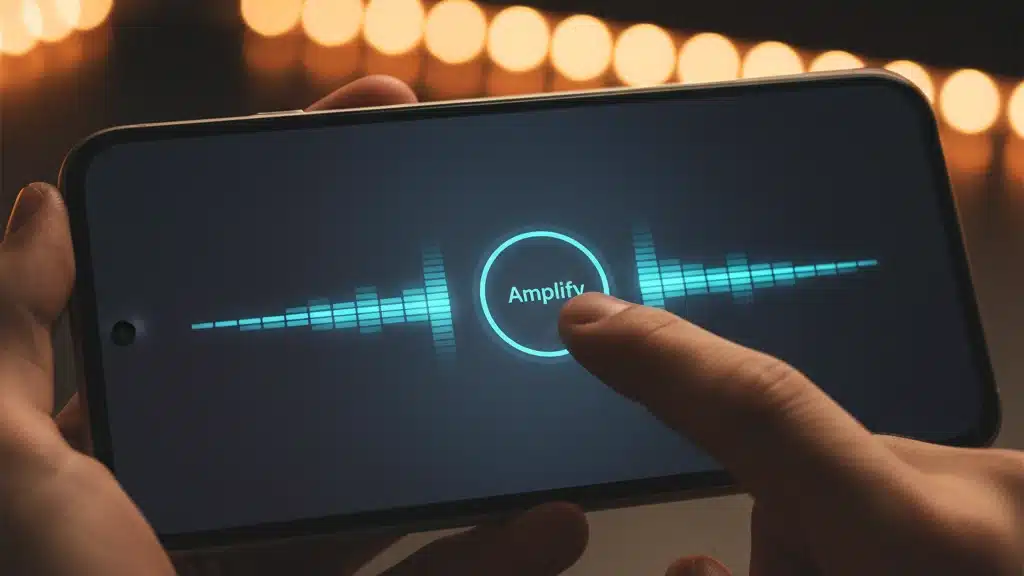
Your cell phone emits a very low sound and you can't hear well. Do you need to increase the volume without damaging the device? There is a solution: sound amplifier apps that enhance audio intelligently.
Internal site links.
Announcements
The best applications to increase volume they not only raise the decibel level, but also improve audio quality through equalizers and sound compressors. In this guide you will discover the most effective free options and how to use them correctly.
This article shows you sound booster apps tested, real features and which one to choose based on your specific audio needs.
 4.8
4.8
Volume Booster & Sound Booster
Announcements
Information subject to alteration. Consult the official website for updated details.
How Sound Amplifiers Work
The equalizers and boosters they don't magically increase the speaker volume. Instead, they optimize the audio waves that your cell phone already generates, eliminating low frequencies that consume energy without sound input and amplifying mid-ranges where the human ear perceives greater volume.
Most phones limited the maximum volume for hardware protection. Sound booster apps surround that limitation through dynamic audio compression.
- Compression: reduce volume spikes to better use the available range
- Equalization: increases mid frequencies where the sound appears louder
- Normalization: match levels of different audio files automatically
- Haptic vibrations: they complement low sound with tactile sensation
The visible result: volume 30-40% higher in most cases, without extreme distortion.
Most Downloaded Free Apps
The popular apps you see on Google Play have millions of installs because they really work. Here are the main options at no initial cost.
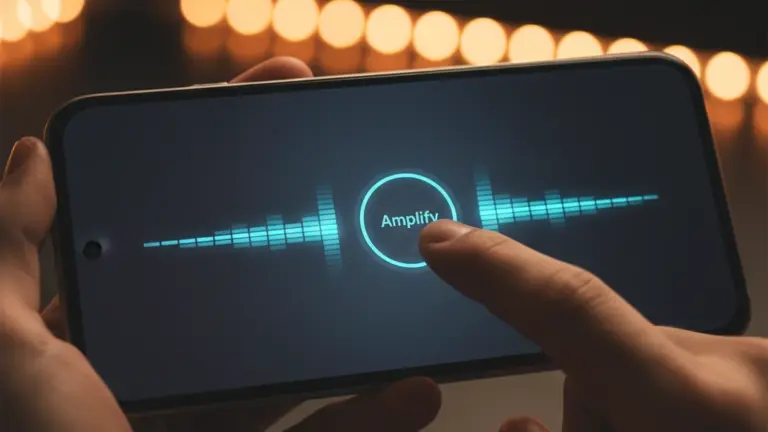
Volume Booster Pro it is the most downloaded app with more than 10 million installations. Includes 10 preset amplification modes (music, movies, calls, video games) and a customizable 10-band equalizer. The interface is intuitive: a central dial shows your amplification level in real time.
Loud Speaker Booster it stands out for its technology super bass integrated. Specifically amplifies bass frequencies without distorting mids and treble. Ideal if you use headphones and need to feel more sound presence in movies or electronic music.
Bass Booster Equalizer it offers 5 preset equalizers (Rock, Pop, Jazz, Classic, Custom) plus an independent bass slider. Downloaded more than 5 million times, it is reliable for quick adjustments without complexity.
Differences: Amplifiers vs Native Equalizers
Your Android cell phone and iPhone already include volume controls and some basic equalizers. Why download an additional app?
Native controls only offer 2-3 linear volume levels. The booster apps amplify in finer increments (50+ levels) and apply intelligent compression that the operating system does not allow natively.
- Control range: apps offer 50-100 steps vs 15-20 system steps
- Dynamic compression: only apps adjust in real time according to audio type
- Thematic presets: native system does not differentiate music from movies automatically
- Visualization: apps display frequency spectrum on screen for visual editing
- Hearing protection: many apps warn you if you reach dangerous levels (85+ dB)
In summary: native equalizer = basic, app booster = professional at no cost.
Real Use Cases
Amplifier apps solve specific problems where the stock volume is not enough.
Video calls in noisy places: the microphone on the other side sounds very low. Using a sound booster increases incoming audio on WhatsApp, Telegram or Zoom calls without affecting the normal calling system. Your contact will not notice a change, but you will hear more clearly.
Home theater with cell phone: if you use your phone to watch series instead of TV, the sound from two small speakers is insufficient. A booster + bass equalizer can simulate surround sound which is close to real cinema experience.
Damaged or old hearing aids: some Bluetooth headphones do not reach maximum volume due to internal limitations. An app booster complements that hardware problem without replacing the device.
Users with reduced hearing: people with mild hearing loss use boosters to compensate without losing clarity. Unlike increasing gross volume, compression maintains intelligibility.
Premium vs Free Amplifiers
All major apps exist in functional free version. Paid versions add extras that rarely justify the cost ($3-8).
Free version includes: up to +30dB amplification, 5-10 band equalizer, 3-5 themed presets, no usage limit, no invasive ads in most reliable apps.
Premium version adds: amplification up to +40dB (marginal, high distortion risk), 31-band equalizers (unnecessary complexity), advanced visual effects, priority support, community preset download.
For 95% of users, the free version is completely sufficient.
- Free Versions: they fulfill basic function without annoying restrictions
- Ads in free apps: banner at the beginning, rarely intrusive
- Usage limit: some limit amplification to +25dB (still useful)
- Payment ROI: not justified unless you are an audio producer
How to Set Up Sound Amplifier Correctly
Installing the app is simple, but configuring it optimally requires a few steps.
Step 1 Goal Permission: download the app from Google Play or App Store. Android will ask for permission to access system volume. Accept for it to work.
Step 2 Goal Choose initial preset: don't start with maximum amplification. Select ésMúsica fren or ésNormal fren depending on what you usually hear. This protects the speaker from sudden spikes.
Step 3 Goal Gradual Test: raise the booster 10-15% every minute while listening. If you notice distortion (scratchy audio, truffles), go down to the previous level. The optimal point is maximum amplification without artifacts.
Step 4 Goal Customize EQ: if the music sounds hollow, turn up the media slider. If you want more impact in movies, increase bass slightly (20-30% extra) and treble a little (10%).
Step 5 Go Save custom presets: most apps allow you to save your settings as à laMi Preset a. Do it for movies, music, video games and calls. This is how you change with one touch depending on activity.
Risks and Hearing Protection
Long-term sound amplification above 85 decibels causes irreversible hearing damage. Responsible apps include warnings, but you must respect them.
Symptoms of excessive exposure: ringing in ears after use, temporary tinnitus, hearing blockage sensation. If you experience this, reduce amplification by 20% immediately.
The best apps like Up Volume Booster they show a red indicator if you exceed 85 dB sustained. Respect that limit. Using maximum amplification (+40dB) more than 30 minutes daily ages the auditory system equivalent to years of normal exposure.
For safe use: moderate amplification (+15-25 dB) for unlimited periods, high amplification (+25-35 dB) maximum 1-2 hours daily, maximum amplification (+35+ dB) only exceptional circumstances (noisy event, emergency).
Low Cost Technical Alternatives
If the apps do not give you the desired result, there are cheap complementary solutions that work together.
Passive cell phone amplifier: cardboard or plastic cone that fits over the speaker. Concentrates sound directionally, apparent gain of +5-10 dB without electricity. Cost: US$2-5 on Amazon. Does not damage the phone, works with any app.
Portable Bluetooth speaker: invest in cheap external speaker (US$ 20-50) with battery. Connect your cell phone via Bluetooth, real amplification of +20-30 dB. Best option if you need mobility without technical limits of the phone.
Best quality headphones: if the problem is that your headphones are old, changing them to decent options ($30-80) gives more volume and clarity than any app. Apps amplify what exists; Good headphones generate better base sound.
Trends and Current Adoption 2024
Google Play data shows that sound booster apps grow 15% annually. In 2024, more than 200 million global active users depend on these tools.
The main growth comes from emerging markets where mid-range cell phones have weak speakers. In India, Brazil and the Philippines, amp downloads exceed those of camera apps.
Important trend: integration of AI in equalizers. Apps like Boom and Dolby Atmos now use machine learning to analyze content types (music, movie, podcast) and automatically adjust bass, mids and treble. Without manual intervention, they adapt sound in real time.
Another trend: mandatory hearing protection. Google Play now requires amplifier apps to have a hearing damage warning in the store description. Serious apps comply and even include érsonic safe mode which automatically limits to 85 dB maximum.
Expectation for 2025: more apps integrated with voice assistants (Google Assistant, Siri) that automatically adjust amplification according to location (gym = +30dB, office = +10dB).