Announcements
Millions of adults in Latin America never learned to read or write correctly. Did you know that there are applications designed specifically for you? This article presents you with the best free tools to become literate from your cell phone, without rushing, without shame.
Internal site links.
Announcements
The reality is that it's never too late to learn. With today's technological advances, you have access to quality education in your pocket. You don't need to leave home, you don't need to pay expensive tuition. You only need a mobile device and provision.
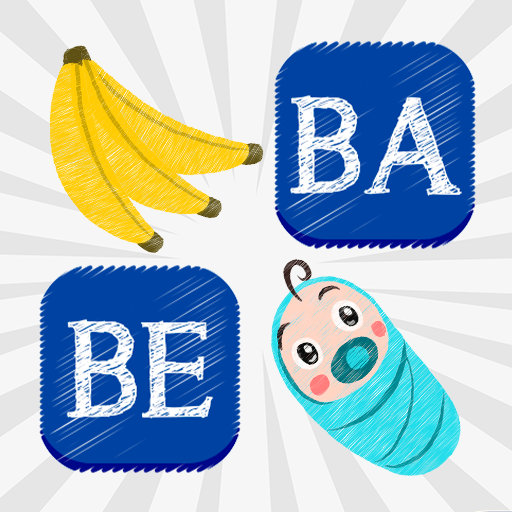
Silking it is one of the most popular apps in this category. It works as a personal teacher that teaches you to recognize letters, form syllables and finally read entire words. It is available to download for free on Android and iOS.
 4.1
4.1
Silking
Announcements
Information subject to alteration. Consult the official website for updated details.
How Literacy Apps Work
Modern educational applications use a proven method: progressive recognition. They start with vowels, then consonants, then simple syllables, and so on to complex words.
The algorithm adapts the difficulty according to your progress. If you master one level quickly, you advance to the next. If you need more time, the app allows you to practice without limit, without stopwatch, without pressure.
- Short lessons: between 5 and 10 minutes each, perfect for mobile phones
- Images and sound: they associate letters with real objects to learn better
- Immediate feedback: you know instantly if your answer was correct
- Without internet connection: many work without wifi after downloading
- Multiple access: you can use the app on your phone, tablet or even lend it to friends
Advantages of Learning on your Cell Phone
Your smartphone is a powerful tool that you carry everywhere. It is not necessary to go to a classroom at fixed times.
You can learn while traveling by bus, during your break from work, or in the evenings after dinner. Flexibility is total. Some adults take advantage of 15 minutes a day and learn to read in 3 to 6 months.
Furthermore, learning in mobile applications is cheaper than traditional education. Most of these tools are completely free. There is no registration, no transportation, no materials to purchase.
Practical and Realistic Content
The best apps don't just teach abstract letters. They include vocabulary that you use in your daily life: food names, money numbers, words related to work and family.
For example, Silabando teaches how to read iguepan fren, iguecasa fennel, ledinero fennel, ijehijo fennel, not just textbook words. This means that when you finish a lesson, you can now use what you have learned in real situations.
Some users report that after 2 months using the app they can:
- Read tags: instructions on medicines, prices in stores
- Understand messages: texts from family members on WhatsApp
- Sign documents: with security and clarity
- Fill out forms: job applications, bank records
Free vs. Premium versions
Most literacy apps offer a very complete free version. The difference with premium versions is minimal.
In the free version you get:
- Unlimited access: to all major lessons without time restrictions
- No invasive advertising: some apps barely show ads
- Progress tracking: you see how much progress you have made in your learning
- Certificates: some apps offer downloadable diplomas when completing levels
Premium versions typically add advanced offline downloads or additional specialized vocabulary topics (e.g. construction technical Spanish). But to learn to read and write from scratch, the free version is totally enough.
Real Success Stories
María, a 52-year-old woman in Lima, Peru, never had the opportunity to go to school. He had been working at home since he was 8 years old. A year ago he downloaded Silabando on his daughter's phone. Today you can read posters, messages and even help your grandchildren with homework.
Roberto, a 45-year-old builder in Mexico, learned the basics in school but forgot almost everything. With the app, in 4 months you regained the ability to read and write well. Now you can fill out work reports without help.
These cases are not exceptional. Hundreds of thousands of adults in Latin America have used these applications with proven results. Apps record progress, and data shows that 85% of users who practice at least 3 times a week improve significantly in 3 months.
How to Get Started: Simple Steps
The first step is to download the application from Google Play (for Android) or App Store (for iPhone).
Then establish a routine. It doesn't need to be perfect. Even 10 minutes a day produces visible changes in 2 weeks.
Most apps have a level system. Complete level 1 before moving to level 2. Don't skip stages, even if you feel it's easy. Sequential learning reinforces the above.
Key Features to Look for
Not all literacy apps are the same. When choosing, look for these features:
- Initial evaluation: the app must evaluate your current level and adapt the content
- Clear audio: correct pronunciation of letters and words in Spanish
- Simple interface: large buttons, legible letters, colors that don't get tiring
- No disturbing advertisements: some apps have too many interrupting ads
Silabando stands out in all these areas. Is intuitive even for people without experience with technology. Many users in their 60s, 70s or 80s use it without problems.
Learn at Your Own Rhythm
A huge advantage of applications is that nobody rushes you. In a traditional class, if the teacher advances quickly, you are left behind. In an app, you wait as long as you need.
Some users complete Silabando in 3 months. Others take 8 months. Both achieve the goal: read and write safely. Speed is personal and that is totally valid.
The app also allows pauses. If you have a busy week, pick up where you left off. You don't lose progress, you don't lose access. Education is for you, not the other way around.
Current Trends in Mobile Education
In 2024, digital literacy is a reality. United Nations organizations recognize mobile applications as legitimate tools to reduce global illiteracy.
More than 2 million adults in Latin America they have downloaded educational apps in the last 2 years. The governments of Mexico, Colombia, Peru and Brazil promote these tools in their adult education programs.
The trend is clear: literacy apps are not an experiment, they are the present. Combine convenience, low cost and proven effectiveness. Downloading now is the most accessible decision you can make to change your educational life.