Announcements
What are ant expenses
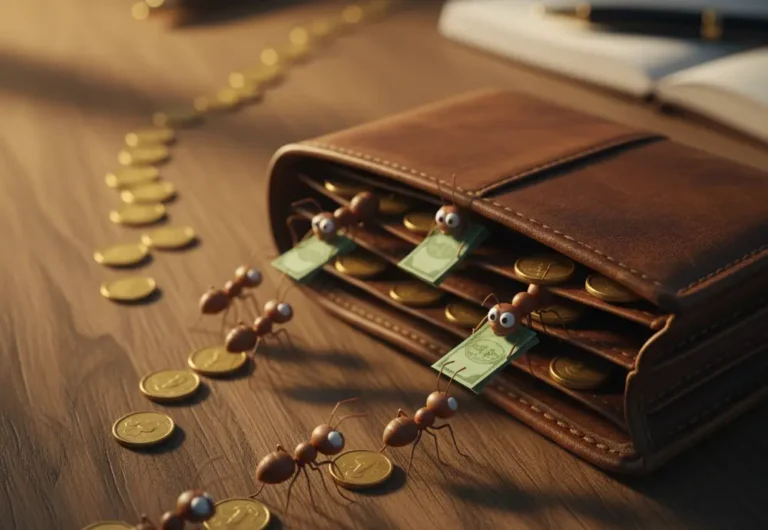
Ant expenses are those small and seemingly insignificant purchases that you make daily without thinking too much. A coffee here, a forgotten subscription there. Separately they don't hurt, but added to the month they can represent between ten and fifteen percent of your income.
Why do they go unnoticed so easily?
Your brain classifies these payments as irrelevant because each individual amount is low. By not perceiving immediate financial pain, you repeat the behavior without questioning it for weeks or entire months.
Announcements
That invisibility is precisely what makes them so dangerous. They don't appear as a problem until you check your accounts and discover a hole you can't explain.
How much money do they represent per year?
Imagine spending three euros a day on small whims without registering them. That is equivalent to more than a thousand euros a year, a figure that many people allocate to vacations or savings.
Announcements
The real impact is not on each isolated purchase, but on constant repetition. That silent frequency turns pennies into amounts that could transform your financial situation.
What are the most common examples?
Digital subscriptions you no longer use, vending machine snacks, and impulse online purchases top the list of common ant expenses.
Small bank fees and express shipments that you choose for convenience also count. Recognizing these patterns is the first step to regaining control of your money.
Now that you know what they are and where they are hidden, the next step is to learn to track them in your daily life so that none of them go unnoticed again.
How to track them on a daily basis
Tracking your ant expenses involves recording every small purchase for at least thirty days to reveal hidden patterns. First write everything down without judging, then group by category and finally analyze which expenses are repeated most frequently.
How to start writing down each small expense?
The simplest method is to record each purchase right at the moment you make it. Just write down the amount, concept and time in your mobile notes.
You don't need accounting precision, just daily consistency. After a week you will begin to notice the whims that are repeated without you realizing it.
What categories help you organize the data?
Group your notes into blocks like food away from home, subscriptions, extra transportation, and impulse purchases. Those categories reveal where the leak is concentrated.
When you see the totals by group, your perspective changes completely. What seemed like isolated expenses becomes a clear pattern that you can correct.
How often should you review your records?
The ideal is to do a brief review every Sunday to add up what was spent during the week. That ten-minute review keeps you aware and motivated.
At the end of the month you will have a complete map of your money leaks. That financial photo is the basis for making decisions with real data and not with assumptions.
With your records in hand, the next step is to choose the right tools to automate that tracking and make the process even easier.
Tools to record microexpenses
There are applications, spreadsheets and manual methods that automate tracking your ant expenses without requiring more than two minutes a day. The best tool is the one you are really going to use consistently, so choose according to your lifestyle.
What apps facilitate automatic control?
Applications such as Fintonic, Monefy or Wallet allow you to record each purchase instantly and categorize it with a single touch on your mobile.
Many connect to your bank and automatically classify movements. This way you detect ant spending patterns without extra effort every week.
Do home spreadsheets work?
A simple sheet in Google Sheets with date, amount, and category columns is enough for those who prefer full control over their data.
The advantage is that you design the formulas and graphics to suit you. That customization helps you visualize exactly where your money is escaping.
What if you prefer the paper and pencil method?
Carrying a small notebook in your pocket is still effective. Writing by hand each expense generates greater awareness because it involves mindfulness.
This method works especially well the first few weeks, when you need to break autopilot by spending without thinking or recording anything.
Now that you have the tools to see each leak clearly, it's time to figure out how to replace those expenses with cheaper habits that protect your pocketbook.
Replace them with cheaper habits
Replacing ant expenses with economic alternatives is the most effective strategy to recover money without feeling like you are depriving yourself of everything. It's not about eliminating pleasures, but about finding options that cost less and satisfy you equally or more.
How to change coffee from outside for a homemade option?
Preparing coffee at home and carrying it in a thermos can save you more than sixty euros per month. The morning ritual is maintained, but your pocket notices the difference.
Invest once in a good bean coffee and a basic coffee maker. That initial expense is recovered in less than two weeks of leaving the daily cafeteria.
What to do with subscriptions you barely use?
Review each active subscription and cancel any you haven't used in the last month. Sharing family accounts reduces costs without losing access.
Many platforms offer free plans that cover the essentials. Leveling down instead of canceling everything allows you to enjoy without paying more.
How to stop impulsive day-to-day purchases?
Apply the twenty-four hour rule: if something tempts you, wait a day before buying it. Most of those impulses go away on their own.
Bring snacks and water from home to avoid the vending machine. That small daily change translates into hundreds of euros rescued each year.
Identifying your ant expenses, tracking them consistently, relying on reliable tools and replacing them with cheaper habits is the direct way for those little thieves to stop stealing your financial peace of mind.